Why Muscle Soreness Feels Worse in Cold Weather — and What Actually Helps
Quick Answer: Cold weather reduces blood flow to muscles and tightens connective tissue before you even start, which means more micro-damage per rep at the same effort level — and slower circulation afterward to clear the inflammatory response. Warming up longer and staying warm post-workout both measurably reduce this.
You did the exact same leg session you always do, but two days later the soreness feels sharper and lasts longer than it does in summer. That’s not in your head — cold genuinely changes how your muscles handle load, both during the workout and in the recovery window after.
Why does cold weather actually intensify soreness?
Cold constricts blood vessels (vasoconstriction), which means muscles start your session with less blood flow and less pliability than they would in warmer conditions. Working a stiffer, less-perfused muscle at the same intensity creates more micro-tearing per rep — the raw material for soreness.
After the workout, that same reduced circulation slows the delivery of nutrients and immune cells that clear damaged tissue and reduce inflammation, so the repair process that causes the sore feeling simply takes longer to resolve.
Does a longer warm-up actually fix this?
Yes, measurably. A 10-15 minute warm-up in cold conditions (versus the 5 minutes that might suffice in summer) raises core and muscle temperature enough to restore much of the blood flow and elasticity you’d have naturally in warmer weather, which reduces the micro-damage from the first several reps of your session.
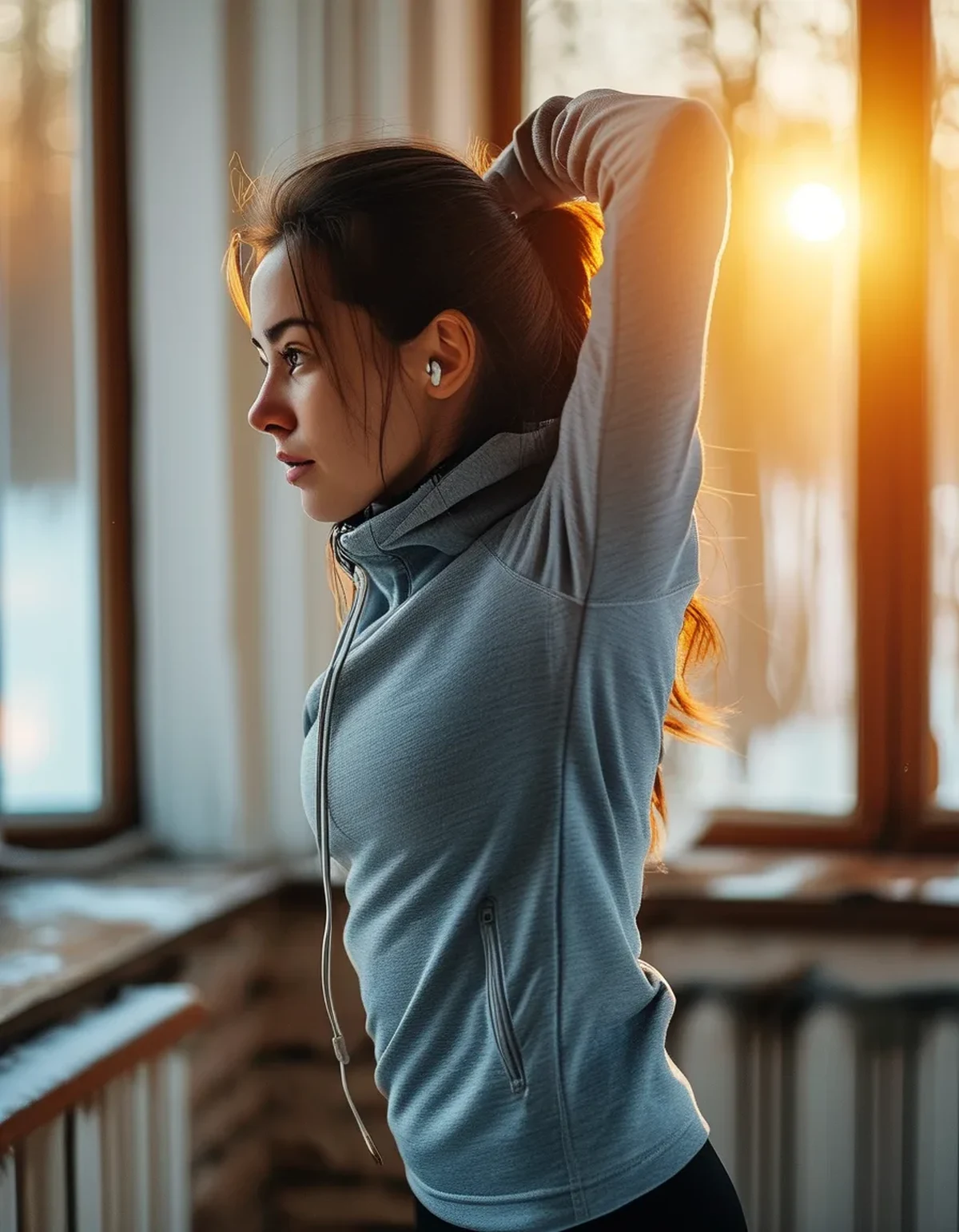
Dynamic movements — leg swings, bodyweight squats, arm circles — work faster than static stretching for this specific purpose, since they actively pump blood into the muscle rather than just lengthening it.

What Nobody Tells You About Post-Workout Cold Exposure
Walking straight from a heated gym into cold air right after training — a common habit for outdoor sessions or a cold car ride home — re-constricts the blood vessels you just warmed up, undoing some of the recovery benefit of the workout itself.
A warm layer thrown on immediately post-workout, even for a short walk to the car, keeps that circulation open longer during the critical first 20-30 minutes when recovery processes are most active.
Does this mean I should train less intensely in winter?
Not necessarily less intensely — just with more preparation. The same training load is fine in cold weather as long as the warm-up compensates for the reduced starting blood flow; the mistake is keeping a summer warm-up routine while temperatures drop.
If soreness is still consistently worse despite a longer warm-up, consider training indoors during the coldest weeks, or shifting outdoor sessions to the warmest part of the day rather than pre-dawn or evening.
FAQ: Cold Weather Soreness Questions, Answered
Does heat make soreness go away faster after a cold workout?
A warm shower or heating pad post-workout can help by restoring blood flow, though it works best as a recovery aid alongside rest, not as a replacement for adequate warm-up beforehand.
Is this soreness pattern different from an actual cold-weather injury?
Yes — soreness builds gradually over a day or two and improves with movement; an injury tends to hurt sharply during or immediately after activity and doesn’t ease with gentle movement. Treat sharp in-session pain differently and see a professional if it persists.
Do some people feel this more than others?
Yes — people with naturally lower circulation, older adults, and anyone training first thing in the morning in cold conditions tend to notice the effect most strongly.
TL;DR:
- Cold weather reduces blood flow before and after training, increasing micro-damage and slowing repair
- A 10-15 minute dynamic warm-up in cold conditions meaningfully reduces next-day soreness
- Staying warm immediately post-workout protects the recovery window, not just comfort
- Sharp in-session pain is different from soreness — treat that as a possible injury, not a cold-weather effect
Keep Reading
This article is for general informational purposes only and is not medical advice. Always consult a qualified health professional for guidance specific to you.