Soreness After Hot Weather Training Is Different — Here Is How
Quick Answer: Heat training produces two overlapping kinds of soreness. Normal DOMS still shows up 24 to 48 hours later from mechanical muscle damage. But heat adds dehydration- and electrolyte-related muscle discomfort that appears within hours, feels more like cramping or general achiness, and resolves with fluid and sodium rather than time. Telling them apart changes what you should do.
You did the same session you always do, and you feel worse than usual — but not in the usual places or on the usual schedule.
There are two different things happening, and only one of them is DOMS.
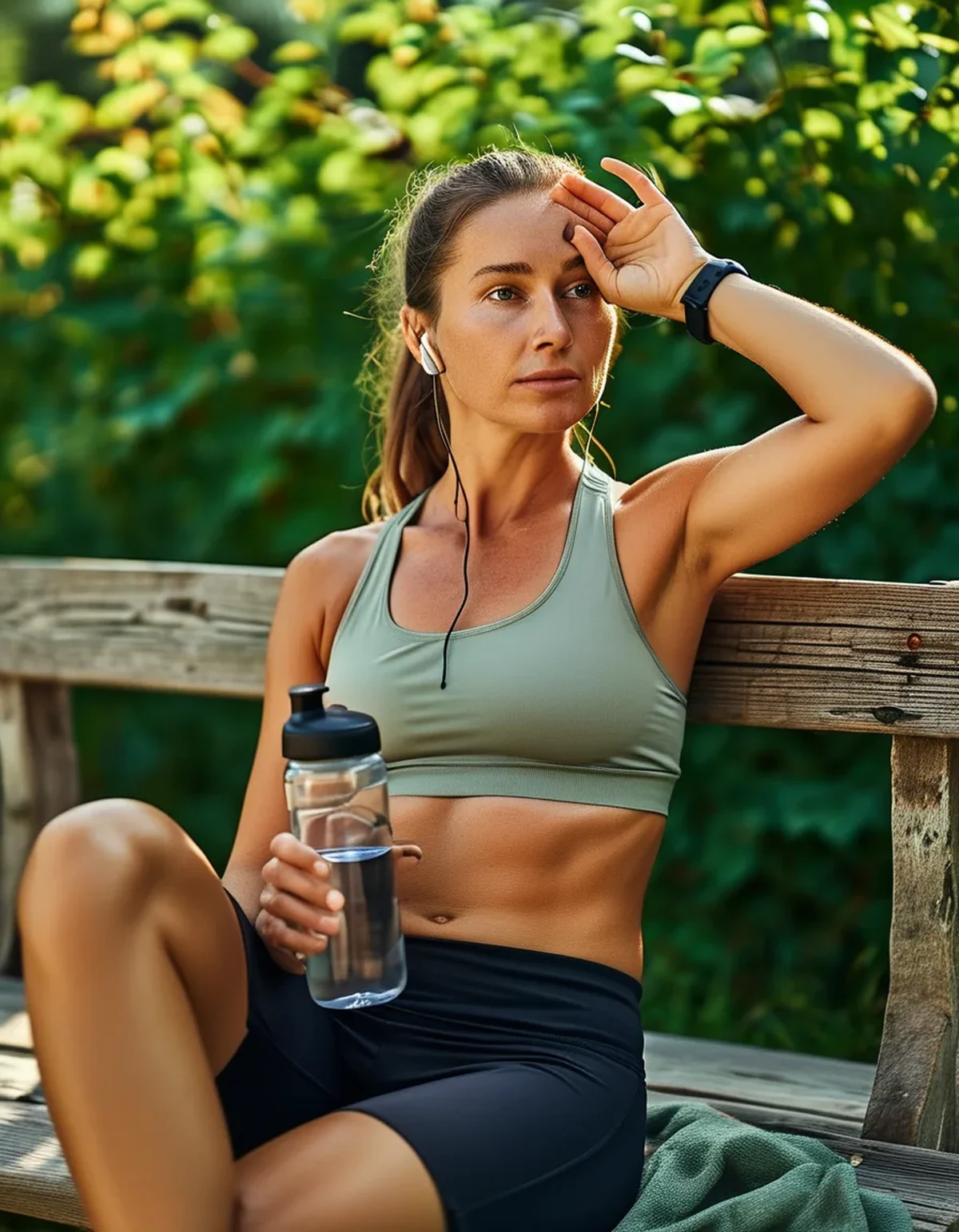
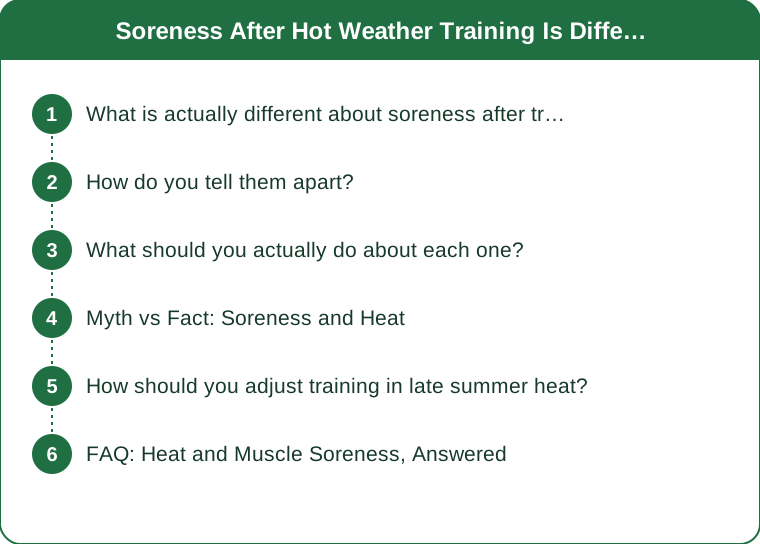
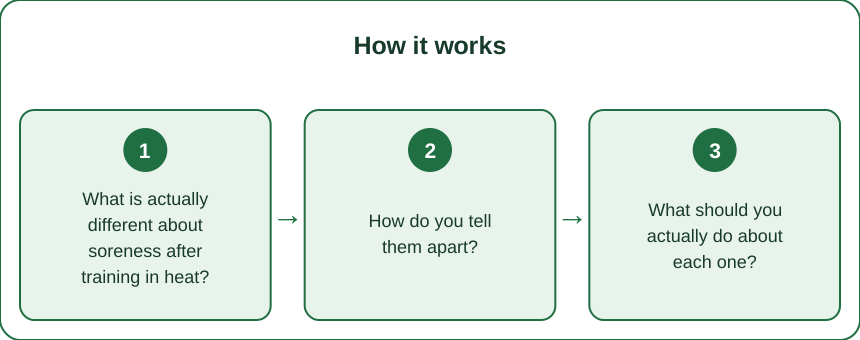
What is actually different about soreness after training in heat?
Normal delayed-onset muscle soreness comes from mechanical stress on muscle fibers, particularly eccentric loading — the lengthening-under-load part of a movement. Microscopic damage triggers an inflammatory repair response, and that response is what you feel. It follows a reliable timeline: minimal immediately after, building over 12 to 24 hours, peaking around 24 to 48 hours, and resolving over 3 to 5 days.
Heat adds a second, separate mechanism.
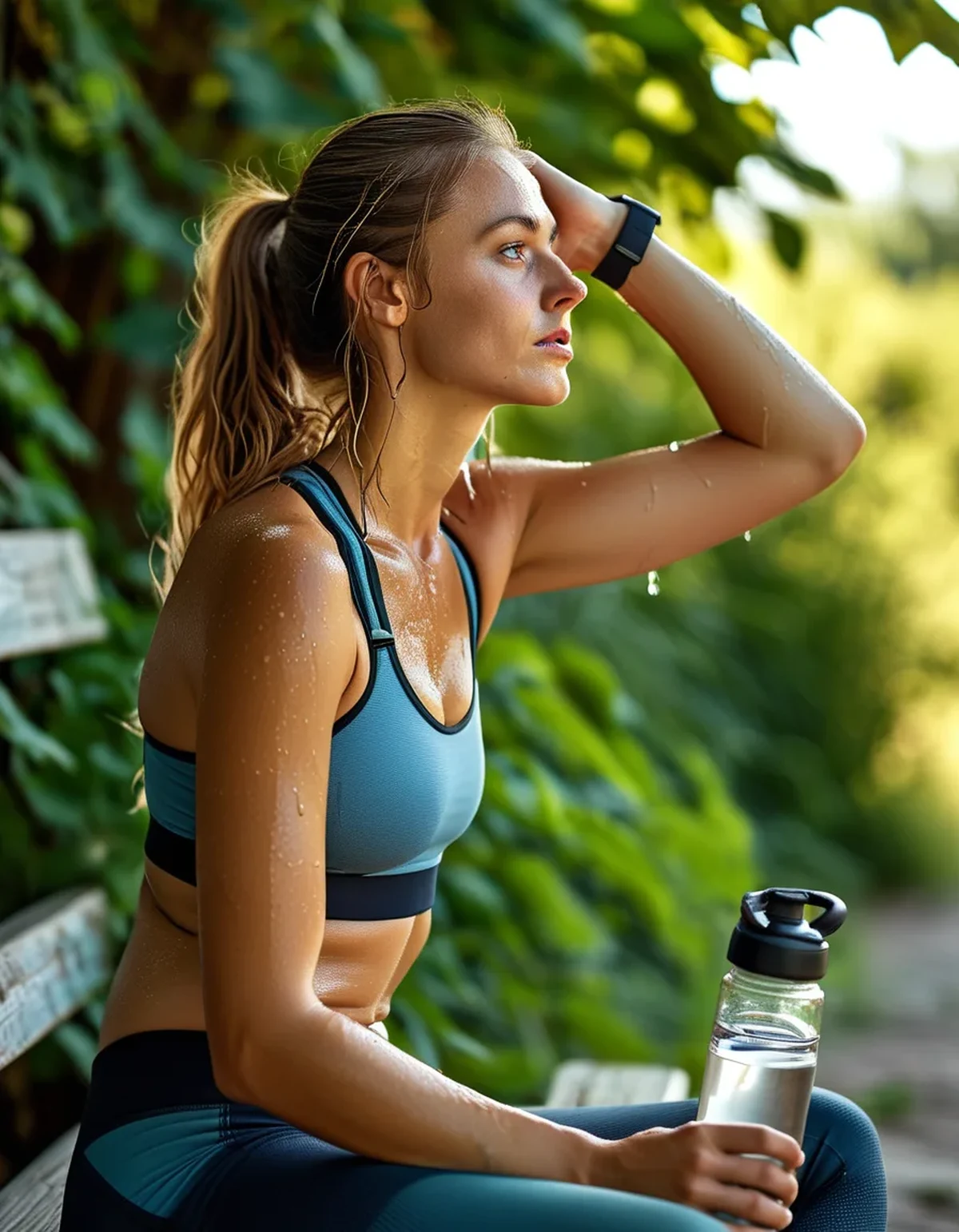
Dehydration and electrolyte shifts produce their own muscle discomfort. Sweating heavily costs you fluid and sodium, which affects muscle cell environment and nerve signaling. The result is achiness, heaviness, twitching, or cramping — and critically, it does not follow the DOMS timeline. It shows up during or within hours of the session, and it responds to drinking and eating rather than to waiting.
Heat also raises the DOMS side of the ledger indirectly. In hot conditions you fatigue faster, and fatigued muscle has degraded control on eccentric loading, which means more mechanical damage for the same session. A workout in 90°F heat may genuinely produce more muscle damage than the identical workout in 60°F, not because heat damages muscle but because tired form does.
So there are three things stacked: normal DOMS, dehydration-related discomfort, and elevated DOMS from heat-driven fatigue. They feel similar and they call for different responses.
How do you tell them apart?
Timing and quality are the two reliable discriminators.
It is likely dehydration or electrolyte related if:
- It appeared during or within a few hours of the session, not the next day
- It feels like general achiness, heaviness, or twitching rather than localized tenderness
- Cramping is involved, particularly in calves, feet, or hamstrings
- You have a headache alongside it
- Your urine was dark afterward or you did not need to urinate for hours
- It improves noticeably within an hour or two of drinking fluid with sodium
- Muscles that did not do much work are also achy
It is likely normal DOMS if:
- It appeared 12 to 48 hours later
- It is localized to the muscles that did the work
- It is tender to touch and worse at the start of movement, easing as you warm up
- It peaks around day two and fades over several days
- Fluid and food make no immediate difference
Both can be present at once, which is the common case after a hard hot session. The useful move is to address the fluid and sodium side immediately — it is fast, cheap, and it resolves within hours — and then judge what remains on the DOMS timeline.
A practical test: drink 500ml of water with electrolytes and eat a proper meal. Reassess two hours later. Whatever is left is DOMS.
What should you actually do about each one?
For dehydration- and sodium-related discomfort — act now:
- Replace fluid steadily, not all at once. Large volumes of plain water quickly can dilute sodium further and make things worse.
- Include sodium. This is the part people skip. Salted food, an electrolyte drink, or a sports drink. If you sweat heavily and only drink water, you can end up worse rather than better.
- Eat a normal meal. Food delivers sodium, potassium, magnesium, and fluid together, and it works better than any single supplement.
- Expect improvement within hours, not days. If nothing improves overnight, it probably was not this.
For DOMS — the honest list of what works:
- Gentle movement. Light activity increases blood flow and consistently reduces the sensation. Walking, easy cycling, or a mobility session.
- Time. This is the main treatment, and there is no shortcut worth much.
- Adequate protein and total calories, which support the repair process.
- Sleep, which matters more than any recovery product.
What is oversold: static stretching does little for DOMS specifically, foam rolling reduces the sensation temporarily without changing the timeline, and ice baths reduce soreness but may blunt some training adaptations if used routinely after strength work.
What to avoid: training the same muscles hard while significantly sore, since force output and control are reduced and injury risk rises. Train something else, or train light.
Myth vs Fact: Soreness and Heat
Myth: Soreness means the workout was effective. Fact: Soreness reflects novelty and eccentric loading, not training quality. A well-designed session you have adapted to may produce no soreness and considerable progress; a random new movement can wreck you for three days and produce nothing.
Myth: Cramping during a hot workout means you are low on potassium. Fact: Sodium is lost in sweat in far larger quantities than potassium, and heat-associated cramping is more commonly associated with sodium and fluid loss plus muscle fatigue. Bananas are fine food and a poor cramp intervention.
Myth: You should push through soreness to build tolerance. Fact: Training through significant soreness reduces performance and increases injury risk without accelerating adaptation. Light movement helps; hard repeat work on the same muscles does not.
Myth: Heat acclimatization means soreness stops. Fact: Acclimatization over 10 to 14 days genuinely improves sweat response and heat tolerance, which reduces the dehydration-related component. It does nothing to the mechanical DOMS side.
Myth: Sweating more means you worked harder. Fact: Sweat rate varies enormously between individuals and with humidity, and well-acclimatized people sweat more, not less. It is a cooling measure, not an effort measure.
Myth: If you are sore, you need more protein. Fact: Adequate protein supports recovery, but extra protein beyond adequate does not reduce soreness. Most people who feel wrecked after hot sessions are short on fluid, sodium, sleep, or total calories — not protein.
How should you adjust training in late summer heat?
The goal is to keep the training stimulus while removing the heat-driven fatigue that inflates the damage.
Move sessions to the coolest window available. Early morning is best by a clear margin. This single change does more than every recovery intervention combined.
Reduce volume before you reduce intensity. Heavy sets stay heavy; cut the number of sets. This preserves the strength stimulus while cutting total heat exposure and total fatigue-driven form breakdown.
Hydrate before, not just after. Starting a hot session already down on fluid is the reliable route to the achy, crampy version of soreness. Drink through the day, not just at the gym.
Add sodium if you sweat heavily or train over an hour. White salt marks on your clothing after a session is the clearest visible signal you are a salty sweater and need it.
Expect acclimatization to help within two weeks. Consistent exposure improves sweat onset, sweat volume, and sodium conservation measurably. The first hot sessions of a heat wave are always the worst.
Watch for the line between hard and unsafe. Heat exhaustion and heat stroke are real risks in outdoor training, and their early signs overlap with normal hard-session feelings. Stop immediately for chills in the heat, confusion, stopping sweating, nausea, or a headache that arrives during the session.
And take one specific symptom seriously: severe, disproportionate soreness with dark or cola-colored urine, especially after an unusually hard session in heat, warrants urgent medical attention. That combination can indicate rhabdomyolysis, which is rare but serious. This is general information, not medical advice.
FAQ: Heat and Muscle Soreness, Answered
Why am I sore after a workout that never made me sore before?
Most likely heat-driven fatigue degraded your form on the eccentric portions, producing more mechanical damage for the same session. Dehydration may also be adding an achiness layer on top.
Should I take an ice bath after hot training?
A cool shower or cool bath is a reasonable way to bring core temperature down after a hot session and feels good. Regular deliberate ice baths immediately after strength training may blunt some adaptations, so keep those occasional rather than routine.
How much sodium do I actually need after a sweaty workout?
It varies enormously between people. A practical approach: eat a normal salted meal after training, and if you regularly finish sessions with headaches or cramps despite drinking plenty, add an electrolyte drink and see if it changes.
Does soreness mean I should skip tomorrow’s session?
Not necessarily. Train different muscles, or do the same movement pattern at reduced load. Complete rest is rarely needed and gentle movement generally reduces soreness faster than rest does.
TL;DR: Hot weather training produces two overlapping kinds of soreness with different fixes.
- Normal DOMS appears 12 to 48 hours later, is localized and tender, and resolves over 3 to 5 days with movement, protein, and sleep.
- Dehydration and sodium loss produce achiness, heaviness, or cramping within hours, and resolve within hours of fluid plus sodium.
- Heat inflates DOMS indirectly by degrading form on eccentric loading through fatigue.
- Test which is which: fluid, sodium, and a meal. Reassess in two hours; what remains is DOMS.
- Cut volume before intensity in heat, and move sessions to early morning.
- Acclimatization takes 10 to 14 days and only helps the dehydration side.
- Severe soreness with dark urine after a hard hot session needs urgent medical attention.
After your next hot session, drink with sodium and eat properly. Then judge what is left.
Keep Reading
This article is for general informational purposes only and is not medical advice. Always consult a qualified health professional for guidance specific to you.