Does Dehydration Actually Make Muscle Soreness Worse? Here's What Connects Them
Quick Answer: Dehydration doesn’t directly cause DOMS (delayed onset muscle soreness), but it can worsen the perception and recovery of soreness by impairing nutrient delivery to muscle tissue and slowing the removal of metabolic byproducts — so staying well hydrated won’t prevent soreness outright, but it can meaningfully affect how it feels and how fast it resolves.
The two are correlated often enough that it’s easy to assume a direct cause, but the actual mechanism is a bit more indirect.

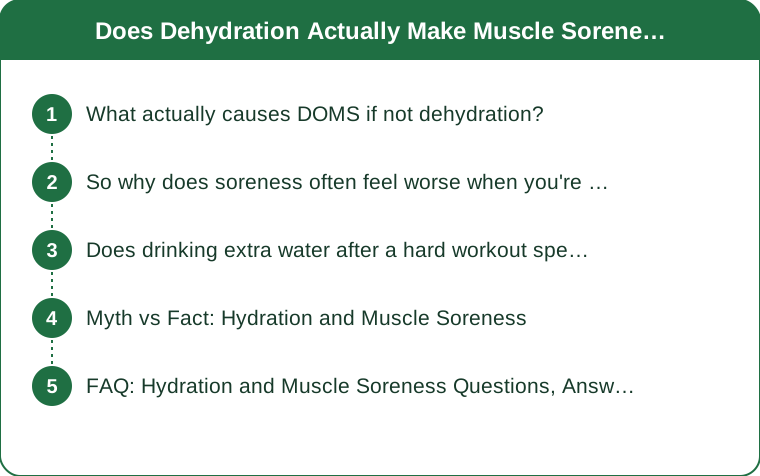
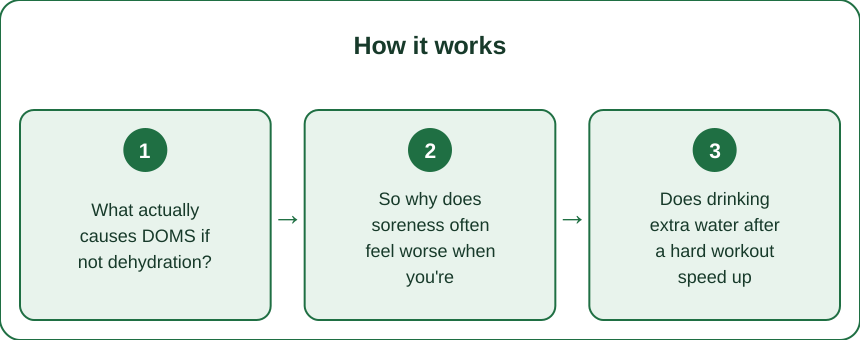
What actually causes DOMS if not dehydration?
DOMS is primarily caused by microscopic damage to muscle fibers, especially from eccentric (lengthening) muscle contractions like the lowering phase of a squat or downhill running — this triggers an inflammatory repair response that produces the soreness felt one to three days later, independent of hydration status.
So why does soreness often feel worse when you’re dehydrated?
Adequate hydration supports blood flow, which delivers nutrients needed for muscle repair and helps clear inflammatory byproducts — when dehydrated, this process slows down, which can make existing soreness feel more prolonged or intense, even though dehydration didn’t cause the initial muscle damage.

Does drinking extra water after a hard workout speed up recovery?
Rehydrating to a normal, healthy level supports the recovery processes already underway, but drinking excessive water beyond normal hydration needs doesn’t appear to accelerate recovery further — the goal is adequate hydration, not maximizing water intake.
Myth vs Fact: Hydration and Muscle Soreness
Myth: drinking enough water prevents DOMS. Fact: DOMS is driven by muscle fiber damage from training load, not hydration status — proper hydration supports recovery but won’t prevent the soreness from happening in the first place. Myth: soreness is a sign of dehydration. Fact: soreness is a normal muscle repair response; check thirst, urine color, and overall hydration habits separately rather than using soreness itself as a hydration indicator.
FAQ: Hydration and Muscle Soreness Questions, Answered
Does electrolyte intake matter more than plain water for soreness recovery?
For longer or sweatier workouts, replacing electrolytes alongside water supports overall recovery, though the direct link to soreness specifically is less established than hydration’s broader role in recovery.
Can you tell if soreness is dehydration-related versus normal DOMS?
Not reliably from the sensation alone — checking hydration markers like urine color and thirst separately is more useful than trying to diagnose the cause from how sore you feel.
Does hydration before a workout matter as much as hydration after?
Both matter — entering a workout already under-hydrated can affect performance and potentially muscle fiber stress during the session itself, not just recovery afterward.
TL;DR:
- Dehydration doesn’t directly cause DOMS — muscle fiber damage from training does
- Proper hydration supports the repair processes that resolve soreness, so it’s not irrelevant
- Overhydrating beyond normal needs doesn’t speed recovery further
- Soreness itself isn’t a reliable hydration indicator — check other markers instead
Stay adequately hydrated for the recovery support it provides, but don’t expect it to prevent soreness on its own.
Keep Reading
This article is for general informational purposes only and is not medical advice. Always consult a qualified health professional for guidance specific to you.