The Active Recovery Day: What to Actually Do Between Hard Workouts
The day after a hard workout presents a fork: the couch (stiffens), another hard session (borrows), or the third path — active recovery, the easy-movement day that speeds everything. The menu, the ceiling and the weekly architecture that makes hard days actually land.

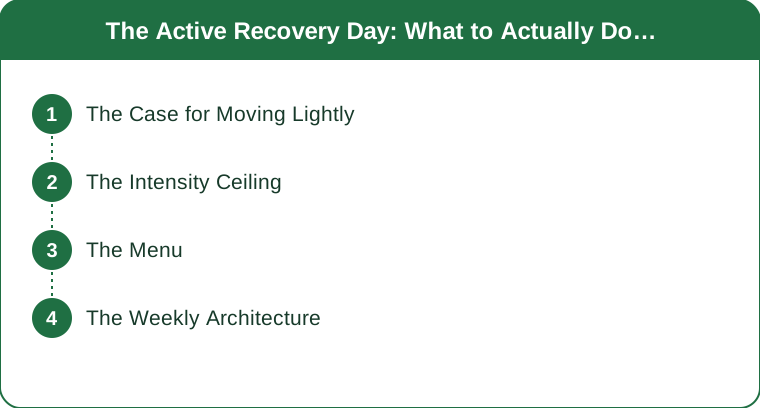
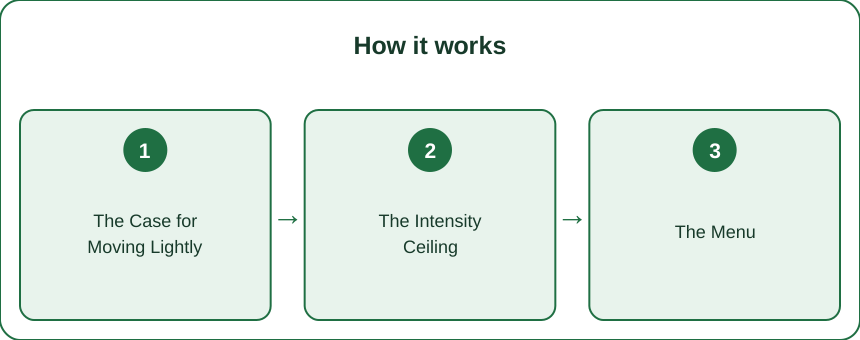
The Case for Moving Lightly
Why easy beats empty: the circulation mechanism (gentle movement pumps blood through recovering muscle — the DOMS-and-motion evidence is consistent; the walk clears what the couch lets pool), the stiffness arithmetic (the total-rest day often FEELS worse by evening — tissues that heal in motion heal comfortable; the second-day stairs review well after an easy day), the nervous-system layer (recovery days downshift the whole system — the parasympathetic menu of easy movement, daylight and the wind-down practices; recovery is a state, not just an absence), and the habit continuity (the daily-movement identity survives on recovery days — the something-every-day pattern that makes training life sustainable).
The Intensity Ceiling
What keeps recovery recovery: the conversation test (fully conversational throughout — the moment sentences shorten, the recovery day became a training day; zone one, honestly), the duration modesty (20-45 minutes — the recovery walk is a dose, not an expedition; more isn’t more here), the no-soreness-chasing rule (working the sore muscle lightly is fine; TESTING it is not — the recovery day takes no measurements and sets no records), and the honest-fatigue clause (some days the right recovery is genuinely horizontal — the yoga-nidra and full-rest tier; the active-recovery doctrine bends to real depletion, and the overtraining signs overrule everything).

The Menu
The recovery-day options: the walk (the default champion — the easy 30 minutes that does everything the day requires), the easy spin or swim (the joint-unloaded circulation tier — the pool stroll and gentle pedal), the mobility session (the hip-opening and band-stretching routines at recovery pace — the flexibility work that hard days never leave room for), the yin-and-restorative yoga tier (the long-hold class that trains stillness while tissues rebuild), the recreational movement wildcard (the casual bike-to-café, the garden hour, the playground with the kids — movement wearing life’s clothes counts completely), and the extras that stack (the foam-roll pass, the warm bath, the earlier bedtime — recovery’s supporting cast).
The Weekly Architecture
Placing recovery deliberately: the hard-easy alternation (the pattern that lets hard days be actually hard — two brutal days back-to-back usually delivers two mediocre ones; the easy day between is what funds intensity), the minimal-fitness placement (the two-hard-session week slots recovery walks between — the architecture most lives fit), the listening layer (the planned hard day meeting a wrecked body downgrades gracefully — the swap-not-skip rule; the calendar proposes, the body disposes), and the reframe that sticks (recovery days aren’t the absence of training — they’re the half of training where adaptation actually happens; the workout wrote the request, the easy day fills the order). Move lightly, sleep honestly, and Thursday’s hard day says thanks.
Conversational pace, 20-45 minutes, no testing the soreness, hard-easy alternation. Active recovery is training’s other half — the easy day that makes the hard ones land.
Keep Reading
This article is for general informational purposes only and is not medical advice. Always consult a qualified health professional for guidance specific to you.